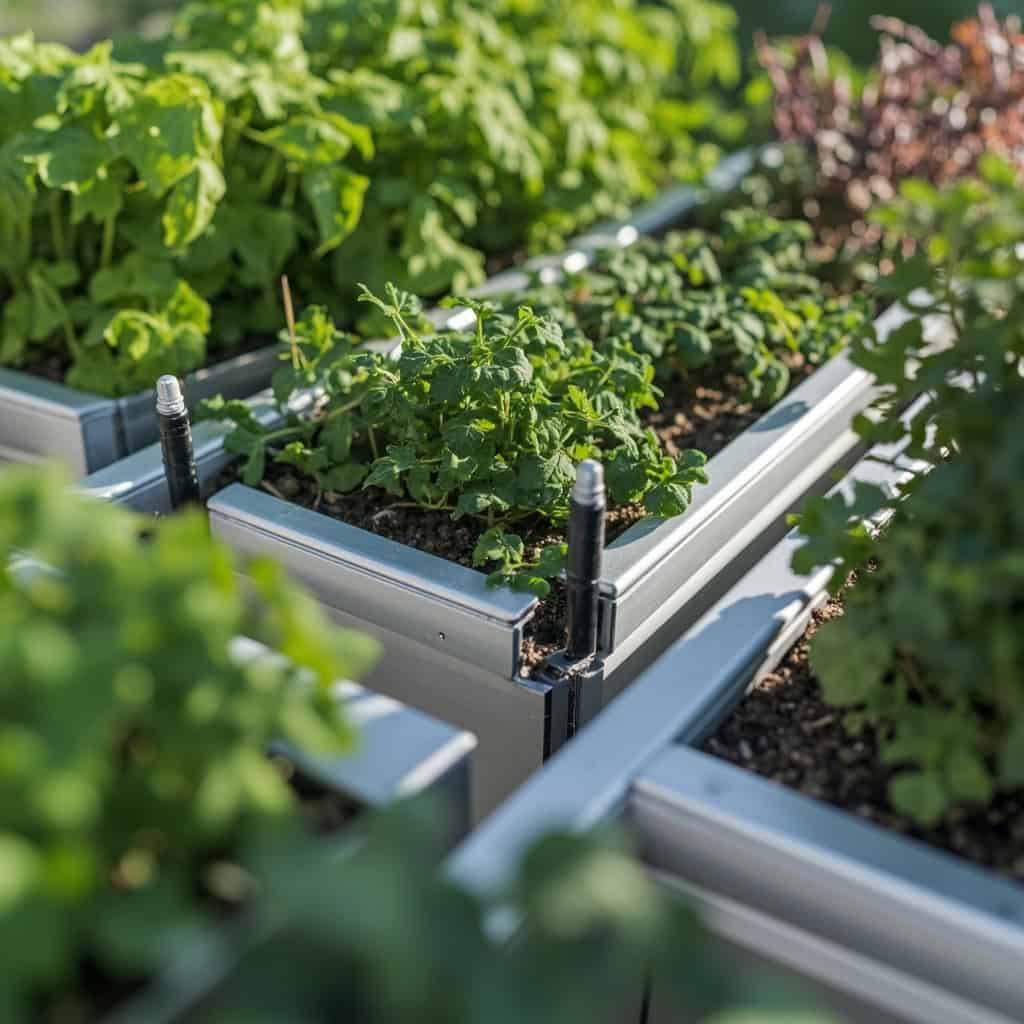
 Here is the thing about modern landscaping: we have gotten incredibly good at making things look lush, but we have gotten embarrassingly bad at keeping them alive efficiently. We overwater. We underwater. We drag hoses around like it is 1950. And then someone had the bright idea to stop treating planters like dumb buckets and start treating them like smart ecosystems. That is where embedding smart irrigation sensors directly within Aluminum Alloy Planter Box channels changes the game entirely.
Let us cut through the noise. Most irrigation systems are reactive at best. A timer clicks on, water sprays out, and you hope for the best. But when you embed a sensor inside an aluminum channel, you are not guessing anymore. You are measuring. You are reading the exact moisture level at the root zone, not some vague approximation from a weather station three miles away. The aluminum channel acts as a structural backbone and a protective housing, keeping the sensor stable, shielded from physical damage, and positioned exactly where the data matters most.
Why aluminum? Because it does not rot. It does not warp. It does not leach chemicals into your soil. And when you design a planter channel with a dedicated slot for sensor wiring and placement, you eliminate the mess of exposed cables, tangled probes, and sensors that get knocked loose by the first gust of wind. This is not just about convenience. It is about reliability. A sensor that moves is a sensor that lies to you. A sensor locked into an aluminum channel tells the truth.
The real advantage here is water savings that hit your bottom line. Commercial properties, rooftop gardens, and high-end residential projects waste thousands of gallons annually because they water on a schedule rather than on demand. With embedded sensors feeding real-time data into a smart controller, you cut usage by thirty to fifty percent. That is not a marketing gimmick. That is physics. When the soil is wet, the system stays off. When it dries out, it waters precisely enough to reach the target moisture level, no more, no less.
And let us talk about the aesthetic payoff. Nobody wants to look at a planter that has a clunky plastic sensor sticking out of the dirt like a sore thumb. Embedded within the aluminum channel, the sensor disappears. The planter remains sleek, clean, and architectural. The technology becomes invisible, which is exactly how good design should work.
If you are specifying materials for a large-scale project or upgrading your own outdoor spaces, stop treating irrigation as an afterthought. The planter channel is not just a container. It is the infrastructure. And when you build that infrastructure with embedded intelligence, you stop managing water and start managing growth. That is the difference between a garden that survives and one that thrives.
About the Author